The Estate
A place shaped by wine, art and nature.
One family, five generations, and three very different pieces of land.
Our Story
Our story.
“For nearly 15 years, Gaure has held me; it inspires me, houses me, and feeds me — so that I might leave my mark, the memory of what I've lived here.”
Since 2005, the Fabre family has been part of the long history of Château de Gaure. The Fabres have been winegrowers, father to son, for five generations — rooted in the Languedoc: Aimé, Marcel, Albin, René, Pierre, and perhaps one day Arnaud or Matisse.
We bought this estate on a genuine coup de cœur, fascinated by its history and the magic of the place. We chose biodynamics from early on, and within a few years our organic wines had made a name for themselves on some of the finest tables in France and abroad.
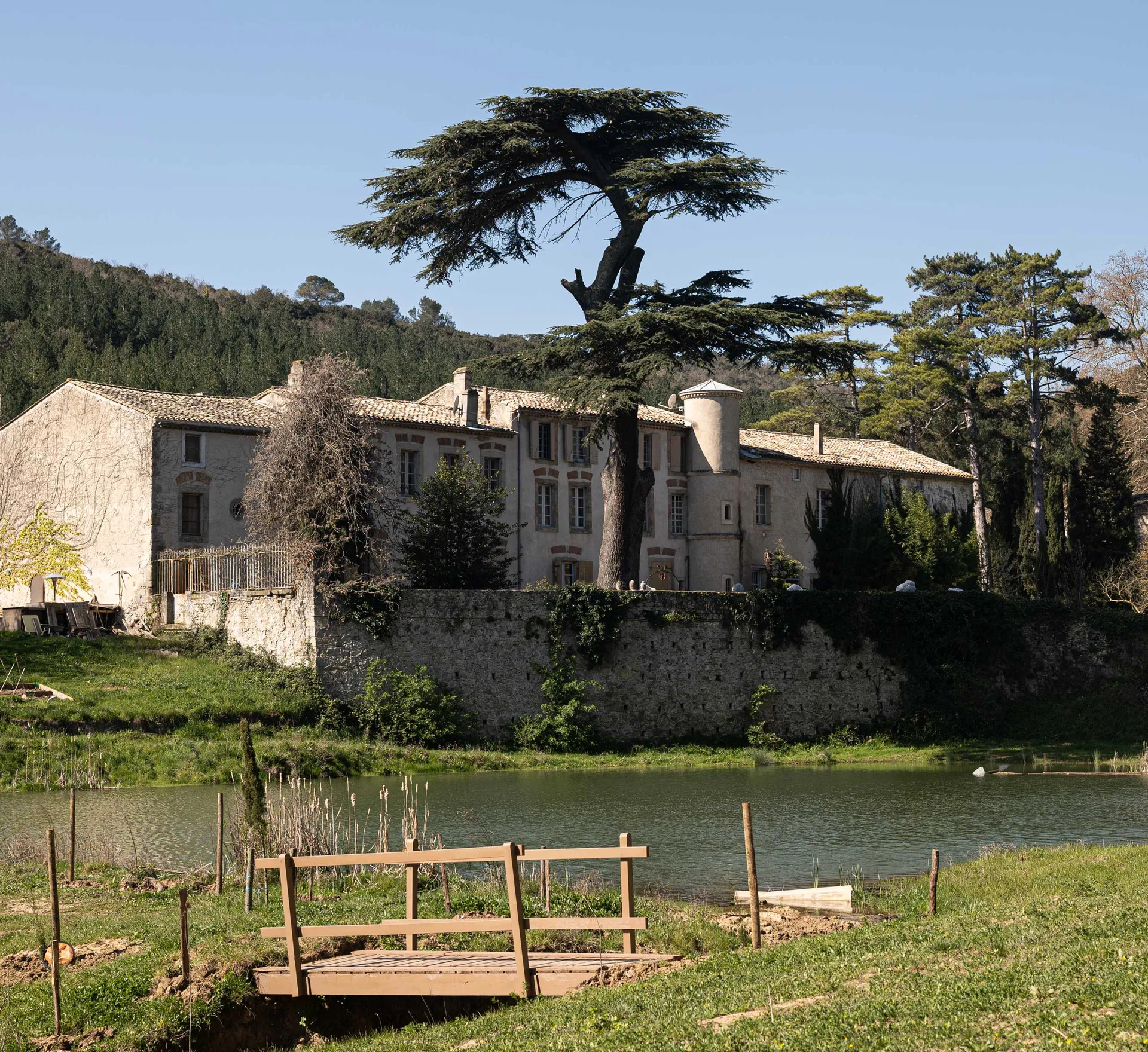
At its origins, the château was a Roman villa. On the plateau above, a promontory known as la Lagaste held a Roman Oppidum in the 1st century — the Oppidum Camp dal Ker that later gave its name to one of the estate's signature cuvées.
The château itself was first built in the 1st century, but it was in the 18th and 19th centuries that it took its current form, with 3,000m² under roof. Gaure's history is the history of the people who built the beauty of this singular place — and, today, of its great wines. That history continues in the name of the estate's principal cuvée: 'Le Château'.
A Long History
From 1150 to today.
Arnaud de Gaure gives himself to the Temple with his two sons (Cartulaire des Templiers de Douzens).
The nobleman Pierre de Rabot, lord of Gaure.
The nobleman Gabriel de Rabot, lord of Gaure.
The secular priory of Saint-Étienne de Gaure stands near today's Chardonnay vines, its tithe belonging to the Bishop of Carcassonne.
Gabriel de Siran, Chevalier Marquis de Cavanac.
The Marquis de Cavanac sells the fief and seigneury of Gaure to Jean d'Estribaud, a merchant of Carcassonne.
Charles d'Estribaud sells to Fulcrau Carles; the estate passes by marriage through the Laperrine and Mont de Savasse families.
The Comtesse Mont de Savasse sells to Guillaume Fau, who later passes it to his son François.
The Fabre family takes charge of the estate's destiny, and converts the vines to organic farming.
Organic certification obtained.
The estate begins its transition to biodynamics.
Pierre & the Family
Pierre & the family.
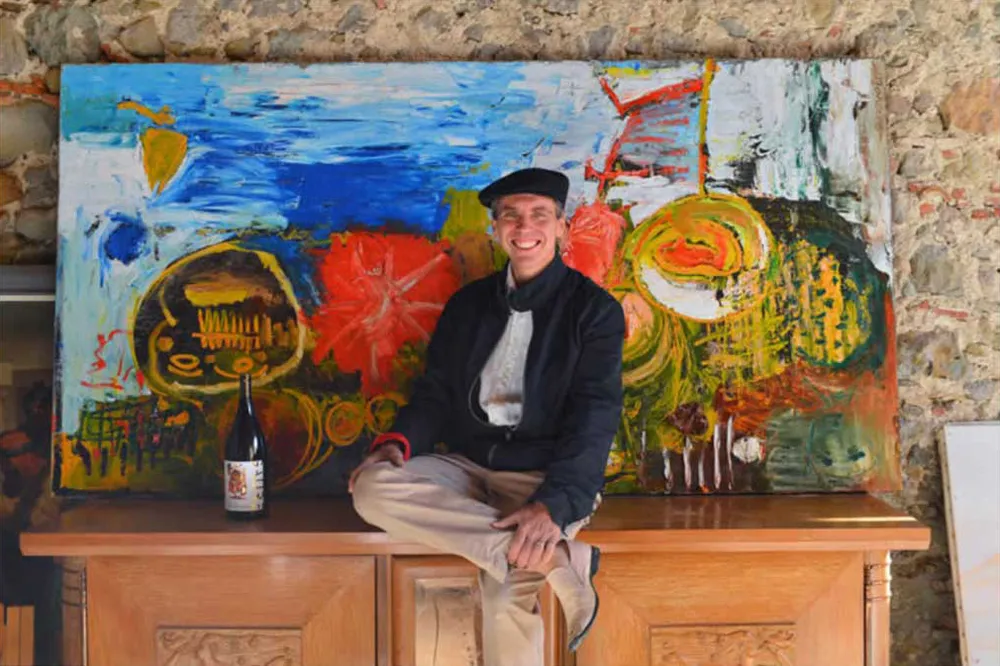
Pierre Fabre leads the estate today, the fifth generation of a family of winegrowers — Aimé, Marcel, Albin, René, and now Pierre, with Arnaud or Matisse perhaps carrying it further still.
His approach to winemaking mirrors his approach to art: patient, hands-on, and unwilling to force a result the land hasn't offered on its own. Family members remain closely involved in the estate's daily life — from the harvest to the guests who come to visit.
Art at Gaure
L'art au Château de Gaure.
Art is giving emotion — at Gaure, whether it's wine, sculpture, painting or the gardens, this place inspires me, and it inspires.
In my painting, I believe I've kept the simple spirit of a child. Painting has always let me escape into a better world, a world without preconceptions. My life hasn't always been a quiet river — separations and losses have led me to express what I feel on paper, canvas, metal. Creative without limits, I've painted and sculpted a great deal, without ever exhibiting all of it.
Hundreds of works finally found a home when we bought the Gaure estate and its 2,000m² of buildings. The chapel, the winery, the tasting hall — all became places to exhibit, and then to create.
The artist in me needed a way to express itself — today, the expression carried in my wines is a wonderful means of expressing what I feel. However long the road, it seems essential to be able to reach for your dreams.
Pierre Fabre
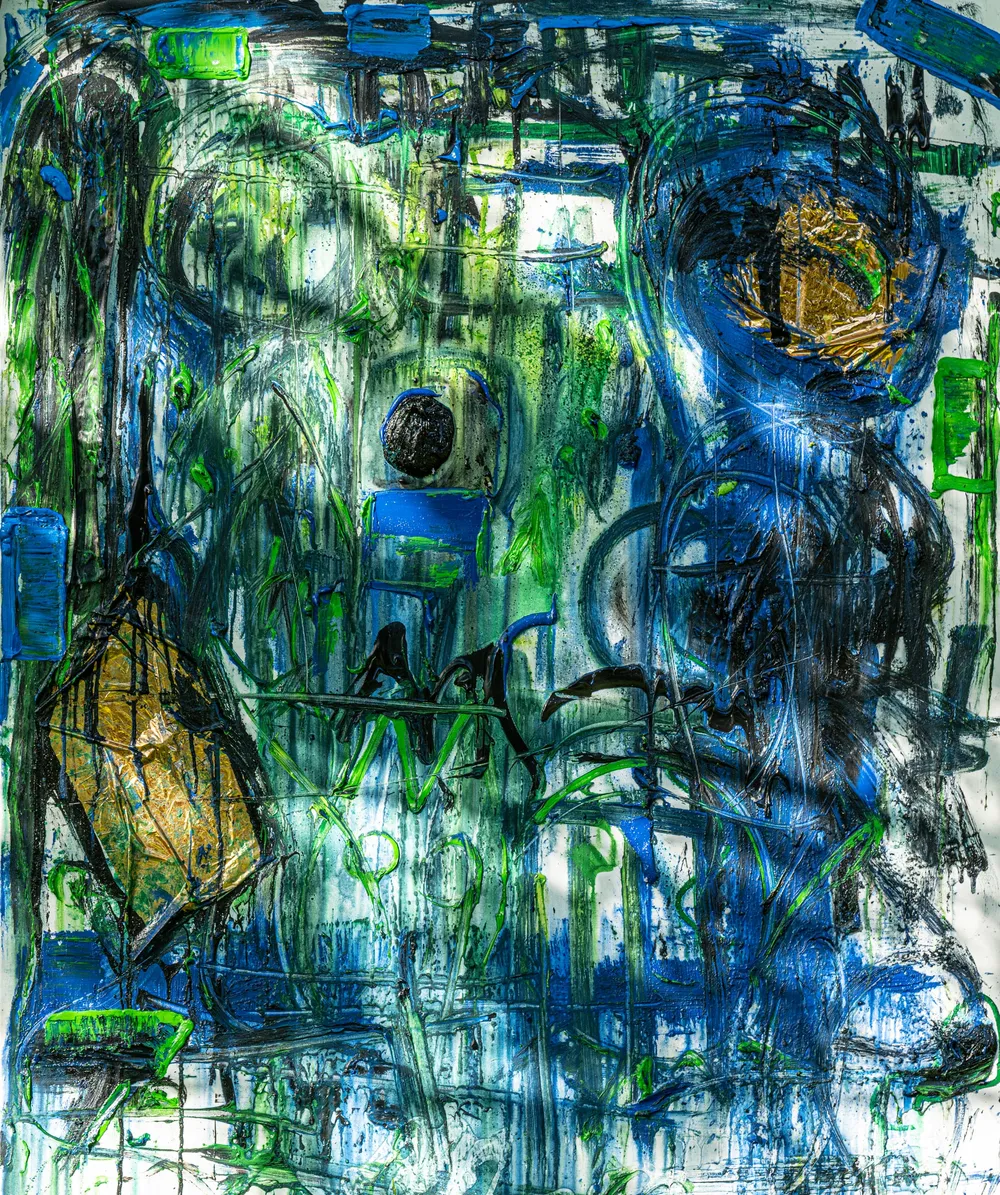
The label has carried meaning since antiquity — Egyptian amphorae bore inscriptions naming a date, a person. For Pierre, a label is more than the legal information it's required to carry: it's an image, a trace of passage meant to last. From the start, the label has been a means of artistic expression — and the estate also offers clients bespoke, made-to-order label personalisation.
Nature & Biodynamics
Nature & biodynamics.
Château de Gaure is a remarkable pocket of biodiversity, protected across successive generations of owners. We have carried out many restorations, always respecting the authenticity of the place and the nature around it.
Wildlife and flora are preserved across the estate's 66 hectares. Since arriving, we have removed all chemical treatments from the vines. Farming organically since 2005, then biodynamically since 2018, lets us build — little by little — a preserved pocket of nature.
In pursuit of that ambition, the 66 hectares were bought progressively rather than planted all at once, and we've preserved the existing plant material — including magnificent old Carignan vines from 1901. Today that ambition is leading us toward a new project: 15 hectares of vines planted around the château, on a plateau in altitude, integrating permaculture, massale selection, housing within the vines, and a new, more ecological winery.
Discover the wines this land produces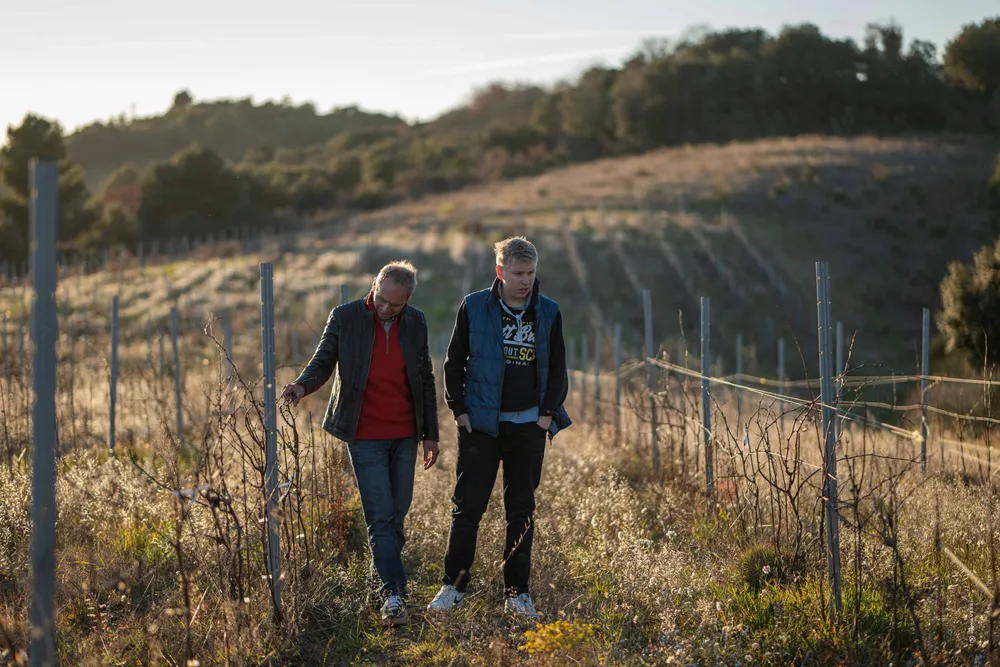
The Method
What is biodynamics?
Biodynamics centres on lunar and planetary rhythms. It emerged shortly after the phylloxera crisis that devastated French vineyards, in response to a group of farmers questioning the direction of agriculture in the early 20th century — as chemical fertilisers and industrial farming began to take hold. In France, the movement grew under figures like Claude Monziès, Xavier Florin, François Bouchet, Nicolas Joly, Pierre Masson and Jacques Mell. Jacques Mell was Pierre's first advisor when the estate began its conversion; today, Marc Kreydenweis, founder of Biodyvin, is his mentor.
The Philosophy
What is permaculture?
Permaculture is a systemic, holistic concept aimed at building resilient ecosystems, inspired by nature's own logic and by tradition. Originally an agricultural idea drawn from the natural-farming model of the Japanese farmer Masanobu Fukuoka, it was theorised in the 1970s by Australians Bill Mollison and David Holmgren — and later extended beyond agriculture to mean 'permanent culture' in the broader, social sense of a sustainable way of living.